On the Camino de Santiago, we often think about the rain… and not enough about the sun. Yet, heat and prolonged exposure to UV rays are among the leading causes of fatigue, heatstroke, and premature withdrawal , especially among novice pilgrims.
Walking for several hours a day, often without shade, with a backpack, requires appropriate, breathable, and durable sun protection . As with rain gear, it's not about taking everything, but about choosing the right equipment and combining it effectively .
Understanding UV radiation while hiking
The sun is not just about the perceived temperature. Even on cloudy days, UV rays penetrate the clouds and affect the skin.
Some important points to note:
-
UVA rays : responsible for skin aging, present all day long
-
UVB rays : responsible for sunburn, most intense between 11am and 4pm
-
When hiking, exposure is long and continuous , which increases the risks
This is why some textile equipment is now designed with integrated UV protection , expressed by a UPF (Ultraviolet Protection Factor) index.
Protecting the head and neck: top priority
Neck protectors (neck warmer, buff, technical scarf)
Often underestimated, they are nevertheless one of the walker's best allies .
Main role:
-
Neck protection, a very exposed area
-
Limiting the risk of burns and sunstroke
-
Sweat absorption
Technical models typically display a UPF 30 to 50+ , meaning they block up to 98% of UV rays.
Benefits :
-
Very lightweight
-
Versatile (neck, head, headband)
-
Quick drying
Cap, hat or bucket hat: how to choose?
The cap
Benefits :
-
Lightweight
-
Good ventilation
-
Ideal for hot weather
Boundaries :
-
It offers poor protection for the neck and ears without additional protection.
Field tip: a cap combined with a neck warmer is a very effective combination.
The hat or the bucket hat
Benefits :
-
Circular protection (face, ears, neck)
-
Permanent shadow
-
Very comfortable on long stages
Technical points to check:
-
Edge width
-
Breathable fabric
-
UV protection (UPF 40 or 50+)
The bucket hat is often more compact and better accepted in moderate wind, while the hat offers maximum protection in full sun.
Protecting the torso and arms: the benefits of UV-protective shirts
Sunscreen shirts
Unlike a simple t-shirt, UV-protective hiking shirts are designed to block rays while allowing air to circulate .
Technical specifications:
-
tightly woven fabric
-
UPF 30 to 50+
-
Long sleeves with roll-up systems
-
Ventilated back
Why long sleeves?
A breathable fabric with UV protection offers better protection than a bare arm coated in cream, especially over several hours of walking.
Additional benefits:
-
Less dehydration
-
Less bag friction
-
Better thermal regulation
The UV-protective umbrella: a still little-known solution
Widely used by some experienced walkers, the anti-UV umbrella is an excellent accessory.
Technical specifications:
-
Reflective fabric
-
Certified UV protection (often UPF 50+)
-
Direct reduction in perceived temperature
Benefits :
-
Creates a constant shaded area
-
Head, shoulder and bag protector
-
Also usable in light rain
Boundaries :
-
Less practical in strong winds
-
Requires a free hand or a mounting system
Ideal for long exposed sections of the Camino Francés or the Camino del Norte.
Should we take everything? No, but combine it well.
Here are some simple and effective combinations:
Beginner Walker
-
Cap or bucket hat
-
Neck protection
-
UV-resistant shirt
Lightweight and affordable solution
Regular walker
-
Hat or cap + neck warmer
-
UPF 40+ Long Sleeve Shirt
Long-lasting protection over extended days
Intense heat and open terrain
-
Hat
-
UV-resistant shirt
-
UV-resistant umbrella
Maximum comfort and reduced fatigue
In conclusion: the sun deserves as much respect as the rain.
On the Camino de Santiago, the sun often accompanies the most beautiful memories… provided you protect yourself properly. Good sun protection means less fatigue, fewer burns, and more pleasure walking day after day .
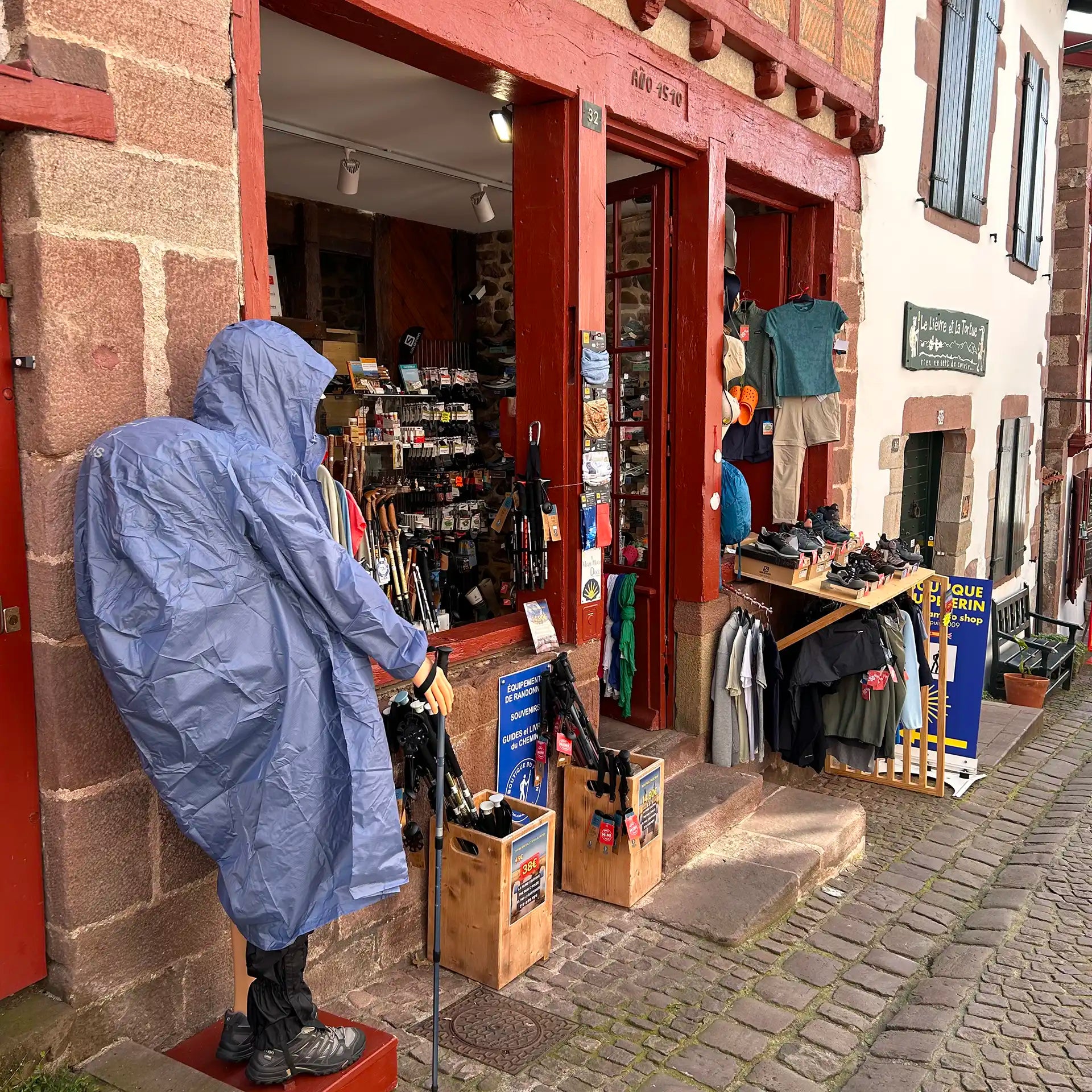
At La Boutique du Pèlerin , in Saint-Jean-Pied-de-Port, we select field-tested equipment designed for pilgrims and hikers, and adapted to each profile.
Protecting yourself from the sun also means taking care of your path .